Research
Publications
June 2021
Navigating the Field.
Postgraduate Experiences in Social Research
This volume is a collation of postgraduate fieldwork experiences in social research that provides a platform for early career researchers (ECRs) to be open about the hidden labour of doing postgraduate fieldwork. This book documents diverse fieldwork experiences, gathering critical reflections on ‘the field’ from a wide range of ECRs. The issues presented here go from the process of identifying the field to navigating life in (and after) it, including things that happen in-between.
Edited by Mildred Oiza Ajebon, Connie Y. M. Kwong, Diego Astorga De Ita
Springer

March 2021
Qualitative Research Methods in Human Geography
Qualitative Research Methods in Human Geography is a practical, in-depth guide to understanding and conducting qualitative research in human geography. Reflecting both established and modern methods and written by some of the most authoritative voices in the discipline, the text teaches students how to plan, execute, interpret, and effectively communicate qualitative research. Organized into three parts, the fifth edition is a comprehensive, engaging resource for both students and new researchers in the field.
Edited by Iain Hay and Meghan Cope.
Fifth Edition. Oxford University Press.

January 2021
Creative Methods for Human Geographers
Introducing a broad range of innovative and creative qualitative methods, this accessible book shows you how to use them in research project while providing straightforward advice on how to approach every step of the process; from planning and organisation to writing up and disseminating research.
The authors provide a complete toolkit for conducting research in this field, while ensuring the most cutting-edge methods are unintimidating to the reader..
Edited by Nadia von Benzon, Mark Holton, Catherine Wilkinson, Samantha Wilkinson, SAGE.

April 2021
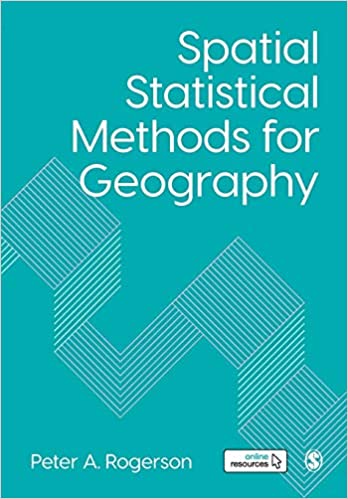
Spatial Statistical Methods for Geography
This accessible new textbook offers a straightforward introduction to doing spatial statistics. Grounded in real world examples, it shows you how to extend traditional statistical methods for use with spatial data.
The book assumes basic mathematical and statistics knowledge but also provides a handy refresher guide, so that you can develop your understanding and progress confidently.
Peter A. Rogerson, Sage.
Join us
Become a Corresponding Member of IGU’s Commission on Research Methods in Geography. Stay up to date on activities, meetings, conferences, and newsletters via email, and be a part of a community of Geographers sharing research methods and practices across the globe.
To join, please complete the form below. There is no membership fee and undergraduate and graduate students are very welcome.